
 Tonic3
How AI Automation Solves HR Challenges
 Tonic3 : Sep 19, 2025, 5:13:17 PM
Why read this article? Understand Practical AI: Learn what AI automation means for your daily HR tasks, moving beyond the tech buzzwords. Get...

In today's fast-paced, hybrid workplace, HR teams face the challenge of being stretched thin. The continuous influx of administrative tasks—such as answering repetitive inquiries, managing paperwork, and troubleshooting basic issues—leaves little room for strategic initiatives that drive a great employee experience. This reactive stance often results in inefficiencies and missed opportunities for meaningful employee engagement.
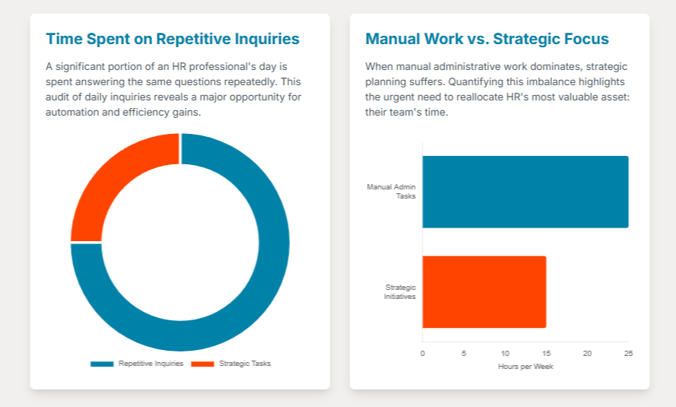
A typical scenario involves HR staff spending a significant portion of their time on repetitive inquiries and manual work. This not only hampers their productivity but also affects employee satisfaction and overall organizational efficiency. To break free from this cycle, HR leaders need to transition from a reactive to a proactive approach, focusing on strategic tasks that add value to the organization.
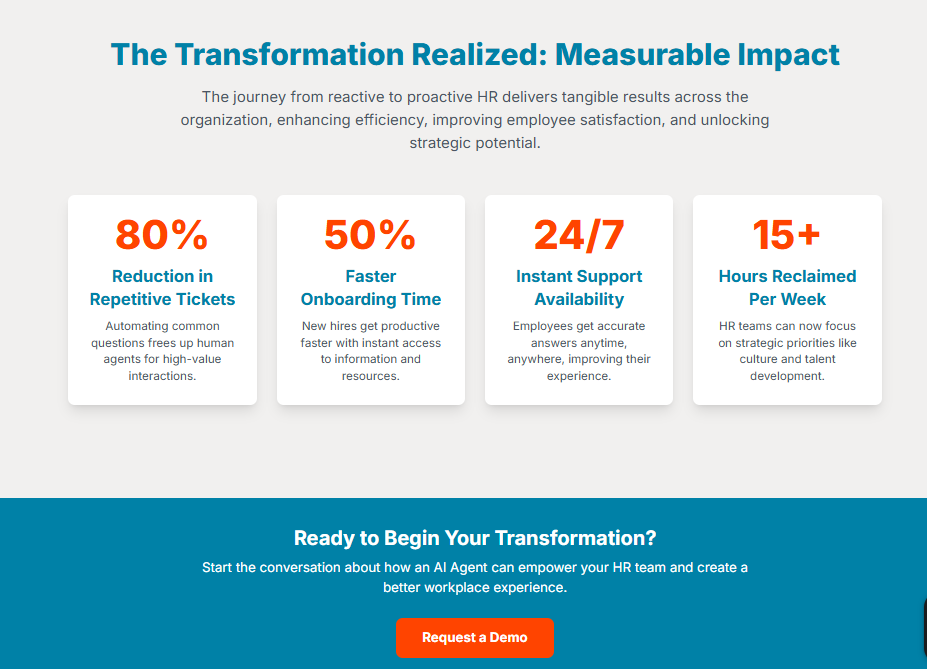
One of the most compelling reasons to integrate AI into HR is the measurable impact it can have on your operations. For instance, organizations that have made the shift report an 80% reduction in repetitive tickets, 50% faster onboarding times, and 24/7 instant support availability. More importantly, HR teams are reclaiming over 15 hours per week, which can be redirected towards strategic initiatives.
These statistics underscore the transformative potential of AI in HR. By automating routine tasks, AI allows HR professionals to focus on activities that enhance employee satisfaction and drive organizational success. The shift from administrative to strategic work not only improves efficiency but also positions HR as a vital strategic partner within the organization.
Implementing Intelligent agents in HR can elevate your team's performance. Here are some specific use cases that illustrate the power of AI:
These use cases demonstrate how AI can shift the focus of HR from transactional tasks to strategic initiatives, ultimately enhancing the overall employee experience. Read more about how AI automation can solve HR challenges.
The real transformation begins with the implementation of AI agents. This goes beyond simple automation and involves integrating AI that can reason, act, and provide strategic insights. Here’s how to get started:
By implementing AI agents, HR teams can shift their focus from administrative tasks to strategic roles such as talent development, employee coaching, and designing a better workplace culture.
Read more about how HR leaders can use quick AI wins for strategic growth.
Transitioning to a proactive, AI-driven HR function requires careful planning and execution. To assist HR leaders in this journey, we offer a comprehensive checklist that outlines the steps to take:
This checklist serves as a roadmap to systematically free your team from administrative burdens and empower them to become strategic drivers of organizational success. Access the full checklist here.

The final step in your transformation journey is selecting the right AI partner. A good partner will not only provide the technology but also offer the expertise and support needed to scale your strategy. Look for a partner who understands your unique needs and can help you leverage AI to achieve your organizational goals.

By following these steps, HR leaders can transform their departments from transactional to strategic, ultimately driving greater organizational success. Embrace the future of HR with AI and unlock your team’s full potential.

Tonic3 : Sep 19, 2025, 5:13:17 PM
Why read this article? Understand Practical AI: Learn what AI automation means for your daily HR tasks, moving beyond the tech buzzwords. Get...

Tonic3 : Jul 14, 2025, 9:45:00 AM
HR leaders today face a constant tug-of-war. On one side, there’s the endless stream of employee questions about benefits, leave policies, and...
.jpg?width=30&name=1632885917795%20(1).jpg) Ale Sanchez : Sep 29, 2025, 9:00:09 PM
Ale Sanchez : Sep 29, 2025, 9:00:09 PM
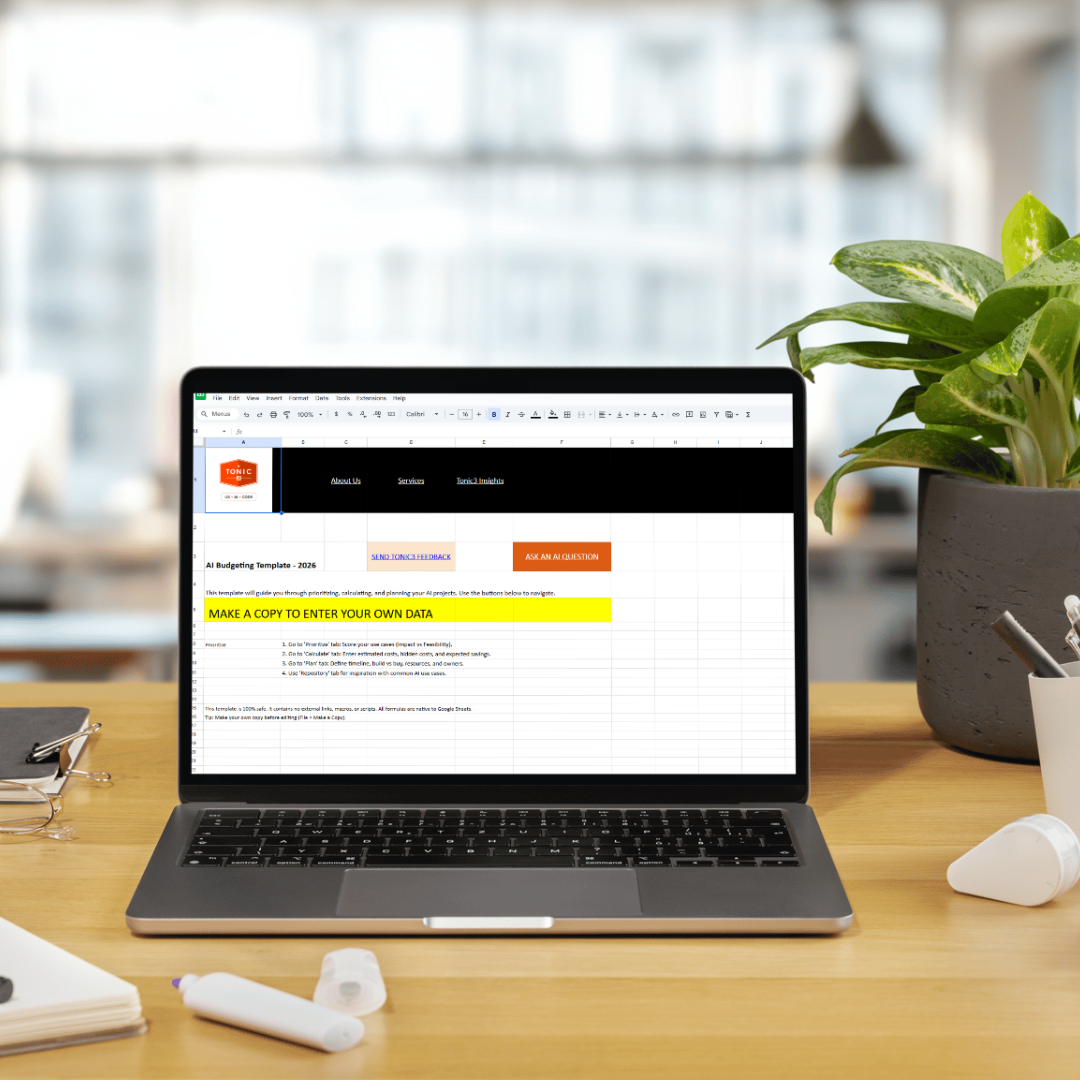
At Tonic3, we are hearing one question more than any other from business leaders eager to adopt AI: "How do we budget for a project when the cost is...