3 Steps to Mid-Market Success with Strategic Azure AI Integration
For Change Champions and Performance Drivers, Azure AI is not just a technological advancement; it's a strategic asset that can transform your...
Tonic3 develops and executes strategies that drive profit through Digital Transformation. Practically that means we are built to help clients hone the right strategy, implement the right technology, and build the right long-term capabilities to deliver lasting transformation.
Industries
We believe that effective technology helps people succeed in their daily lives. So we help our clients engineer useful technology for their clients, partners, and employees. That translates to every major industry, but over the years we’ve developed several core areas of expertise.
5 min read
Marion Decobert
:
Mar 17, 2026 5:20:17 PM
The digital landscape is currently undergoing its most violent transformation since the introduction of the iPhone. For Product Owners and Marketing Leaders, this is a race for adoption and retention. For the UX Strategist, it feels like a fight for relevance.
However, the most recent data shows your job isn’t disappearing; it’s being promoted. We are moving away from pixel-pushing and toward "Experience Orchestration."
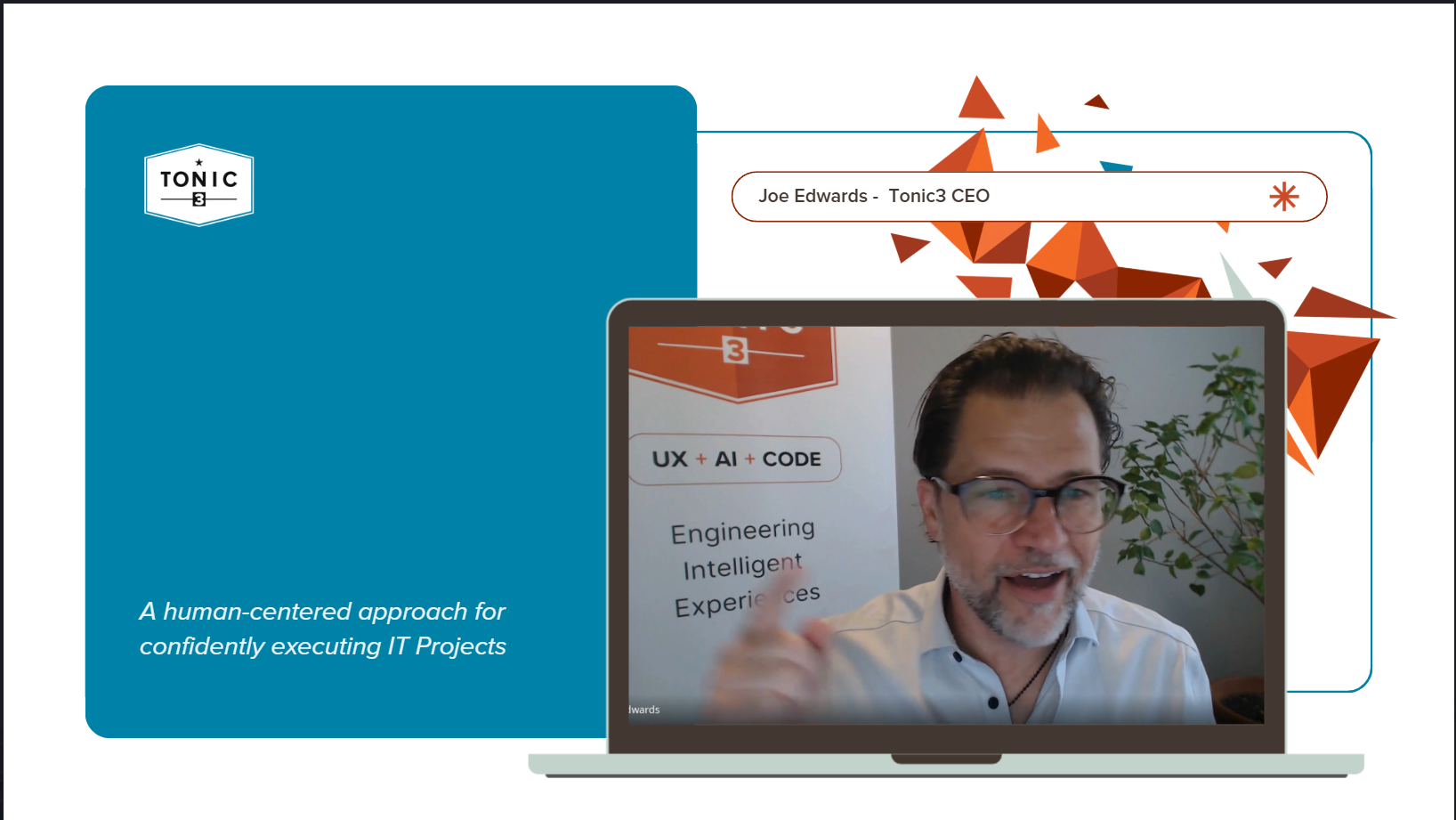
And be sure to dig into our CEO's point of view about the minimum critical priorities for any enterprise needing to scale delivery and implement technology projects with confident execution.
In 2026, the linear path (Search > Landing Page > Cart) is obsolete. AI-driven "liquid interfaces" now reconfigure themselves in real-time based on user intent.
This means designing systems where AI can adapt layouts, offers, and tone based on intent and behavior. How do we do that? Establish a tightly defined framework of approved patterns, constraints, and escalation paths whenever confidence is low or a decision carries meaningful risk.
Users no longer want to find things; they want things to find them. We are shifting from "Click and Scroll" to "Command and Receive." We've been on this path for a few years now, the influx of generative AI experiences has prioritized the need. Instead of designing paths for users to follow, we now are challenged to design conversations, where a single prompt can trigger complex workflows, surface personalized recommendations, and orchestrate multi-step tasks across platforms.
UI is no longer static. Components are generated on the fly to match the user's technical literacy or accessibility needs.
This is where rapid prototyping becomes a non‑negotiable practice for Product Owners and Customer Experience leaders. When you’re orchestrating GenUI experiences at scale, the specific needs of your most valuable and high‑priority customers can’t rest on intuition or internal bias—they have to be surfaced, tested, and refined through real interaction data and structured experimentation.
Your users are no longer just humans; they are "User Agents." Designers must now optimize for how an AI agent interacts with their product to perform tasks on behalf of a human.
The Shift: We are moving from "Command-and-Control" (user does everything) to "Goal-Expression" (user defines the outcome, agent handles the execution).
Deep Dive: As we explored in our recent blog post From Design Thinking to System Orchestration, the UX Strategist’s new role is to design "Human-in-the-loop" checkpoints that prevent "Agentic Gridlock."
The 2026 UX Strategist doesn't just ask "Is this easy to use?" but "Is this worth doing?" AI can make anything usable; only a strategist can ensure it is useful.
The modern strategist frames questions like:
Does this experience meaningfully improve a user’s day—or just increase engagement time?
Is the data we’re asking for proportionate to the value we’re giving back?
Are we reinforcing healthy, ethical behavior, or simply exploiting attention?
With the rise of "Personal AI Agents," UX must facilitate "Data Handshakes." Users will grant temporary access to their personal data silos in exchange for hyper-value.
In this new landscape, trust is not a one-time checkbox; it is an ongoing, experience-level contract between user, agent, and brand.
As AI-generated content saturates the web, "Human-Made" UX becomes a luxury signal—a visible indicator that real people have invested thought, care, and accountability into the experience.
Users begin to associate human-crafted flows, language, and visual nuance with higher trust, better judgment, and a greater sense of safety. Strategists must find where the "Human-in-the-loop" adds the most emotional value.
Design systems are moving away from rigid grids to "Atomic Fluidity." Layouts expand and contract like organic matter based on the device—be it a screen, a pair of AR glasses, or a voice interface.
The system behaves more like living tissue than printed layout—expanding, contracting, and reshaping itself to maintain clarity and usefulness regardless of whether the user is on a screen, inside a headset, or interacting entirely through audio.
Standard error messages are gone. UX in 2026 uses sentiment analysis to adjust its tone in real time, reading signals from voice, text, cursor behavior, and interaction patterns to understand how a user is feeling in the moment. If a user is frustrated, the interface simplifies: language becomes clearer and more direct, visual noise is reduced, and the system proactively offers the next best action instead of listing every possible option.
To the UX Strategist: If your value was in Figma shortcuts, you are in trouble. But if your value is in Problem Framing, you are more valuable than ever.
As AI handles the "UI production," the Strategist moves into the role of System Architect. You are the one defining the ethical constraints, the emotional resonance, and the strategic alignment that AI cannot "hallucinate" into existence.
"AI can give you the 'what,' but the 'why' remains a human enterprise. In 2026, our mission isn't just to build faster; it's to build with more purpose."
When “design” is limited to UI polish, no one owns the end-to-end human experience—so teams can ship on time and on budget while still missing adoption, satisfaction, and trust.
UX leadership changes that. A UX leader turns research into strategy, aligns product, engineering, and data around real user outcomes, and makes the hidden costs of poor experience visible—support volume, rework, churn—so you invest in experiences people actually want to use and can succeed with.
Reframe your roadmap around intents and adaptive journeys instead of static features—prioritizing where AI can respond to live user signals, not just follow predefined flows. That requires strong UX leadership to map critical moments, design transparent interactions, and define what “good” looks like for trust, control, and feedback.
In parallel, you’ll need mature engineering and data capabilities to instrument behavior, integrate with your existing stack, and operationalize AI models safely at scale. A strong implementation partner who understands both human-centered UX and the technical realities of AI delivery can help you prototype quickly, harden what works, and keep experiences responsive as your users and business evolve.
As AI moves from “nice-to-have” features into the core of products and operations, the cost of poorly designed experiences multiplies. Models can be technically accurate yet still erode trust if the interaction feels opaque, biased, or unpredictable.
UX leadership steps in as the connective tissue between data science, engineering, and the humans on the other side of the interface. A strong UX leader ensures AI use cases are grounded in real workflows, explains what the system is doing in language people understand, and defines guardrails that respect user expectations and organizational risk. Without that leadership, AI becomes something you “bolt on” rather than a capability you confidently scale—leaving value on the table and your teams reacting to issues instead of shaping the experience from the start.
For Change Champions and Performance Drivers, Azure AI is not just a technological advancement; it's a strategic asset that can transform your...
From the days of hand-coded HTML in 1995 to today’s immersive AR/VR playgrounds and genAI explosion, at Tonic3, we've always been about using...
Since the value of UX Design seems to be - at first sight - difficult to quantify as compared to benefits offered by other investments, it can...