Boosting Productivity and Efficiency with Human-Centric AI Design
Companies are already reporting 75% AI projects delivered. Planned. Delivered. We've talked with companies still ironing out their first wave of AI?...
Tonic3 develops and executes strategies that drive profit through Digital Transformation. Practically that means we are built to help clients hone the right strategy, implement the right technology, and build the right long-term capabilities to deliver lasting transformation.
Industries
We believe that effective technology helps people succeed in their daily lives. So we help our clients engineer useful technology for their clients, partners, and employees. That translates to every major industry, but over the years we’ve developed several core areas of expertise.
5 min read
Tonic3
:
Jun 3, 2025 9:20:33 PM

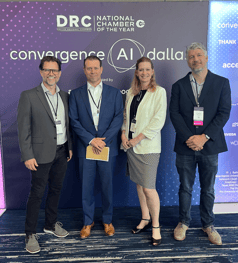
Several members of the Tonic3 team attended the Convergence AI Dallas conference this month. In addition to celebrating our own Leader of Emerging Technologies Preston McCauley, we also observed some fresh results proving how AI is rapidly moving beyond traditional knowledge work to profoundly impact the physical world, especially for field operations, maintenance crews, healthcare workers and other frontline operations teams. The examples shared, from predictive maintenance at DFW Airport to energy optimization in higher education, offered compelling insights into how intelligent, well-orchestrated AI can have an immediate impact on real-world operations.
We’ve outlined a few take-aways for any leader looking to harness this potential: you can get to the operational data now with the right orchestrated AI thinking, and don't wait to integrate your Operational Technology (OT) and Information Technology (IT) data. But more importantly, the true power of AI in physical operations is unlocked only when it's designed with the human at its core – a critical factor for driving adoption to achieve tangible results.
The event underscored that applying AI in the physical world, particularly for operational teams, unlocks significant business impact. This isn't just about theoretical gains; it's about improving efficiency, reducing costs, and enhancing customer experience by leveraging AI to unify OT and IT data, providing actionable insights and predictions.
As Josh Ridley, CEO and Co-founder of Willow, highlighted, the strategic approach is to start with operational improvements and then expand to revenue-generating opportunities. His insights focused on "digital twins" – unified views of operations integrating diverse data sources. This enables operational teams to query data, access information from manuals and various databases, and make informed decisions, leading to significant improvements in efficiency and cost savings.
In his panel discussion with Carlton Dossman, Corporate Vice President of U.S. Commercial Industries at Microsoft, Ridley emphasized a crucial point about AI agents: they are "full-stack engineering beasts" requiring deep integration and coordination across multiple layers of technology. The user may see it as simple, but under the hood, it's anything but. This complexity means that simply deploying AI isn't enough; success hinges on translating powerful AI into usable, impactful tools that truly elevate frontline team performance. This requires a nuanced understanding of how humans will interact with these complex systems.
The AI Leaders from Microsoft and Willow shared compelling evidence of AI's direct impact:
.png?width=900&height=501&name=blog-graphic-05-27%20(1).png)
The consensus advice for implementing AI in these operational contexts is clear:
Successfully navigating these steps requires a partner who understands not just the technology, but how to ensure its seamless integration into human workflows, building trust and driving adoption.
At Tonic3, we don't just acknowledge these realities – we build upon them. Our UX+AI+Code philosophy is specifically designed to address the complexities of AI in the physical world, ensuring your investments deliver tangible, sustainable value.
We specialize in designing and building custom AI solutions that integrate software-specific agents with universal/agnostic agents for internal business processes. We understand the intricate infrastructure required to deliver seamless UX simplicity for frontline users, ensuring your AI investments drive real business value.
By partnering with Tonic3, organizations can:
Don't wait to integrate OT and IT data. Unlock the data NOW with the right orchestrated AI thinking and a human-centered approach.
Ready to elevate the performance of your frontline problem solvers with human-centered AI that drives efficiency, ensures compliance, and delivers measurable ROI? Contact Tonic3 today.
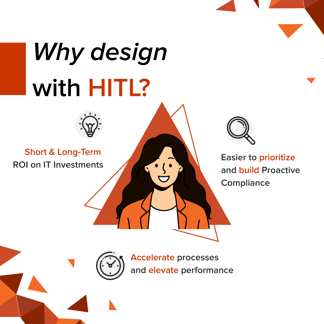
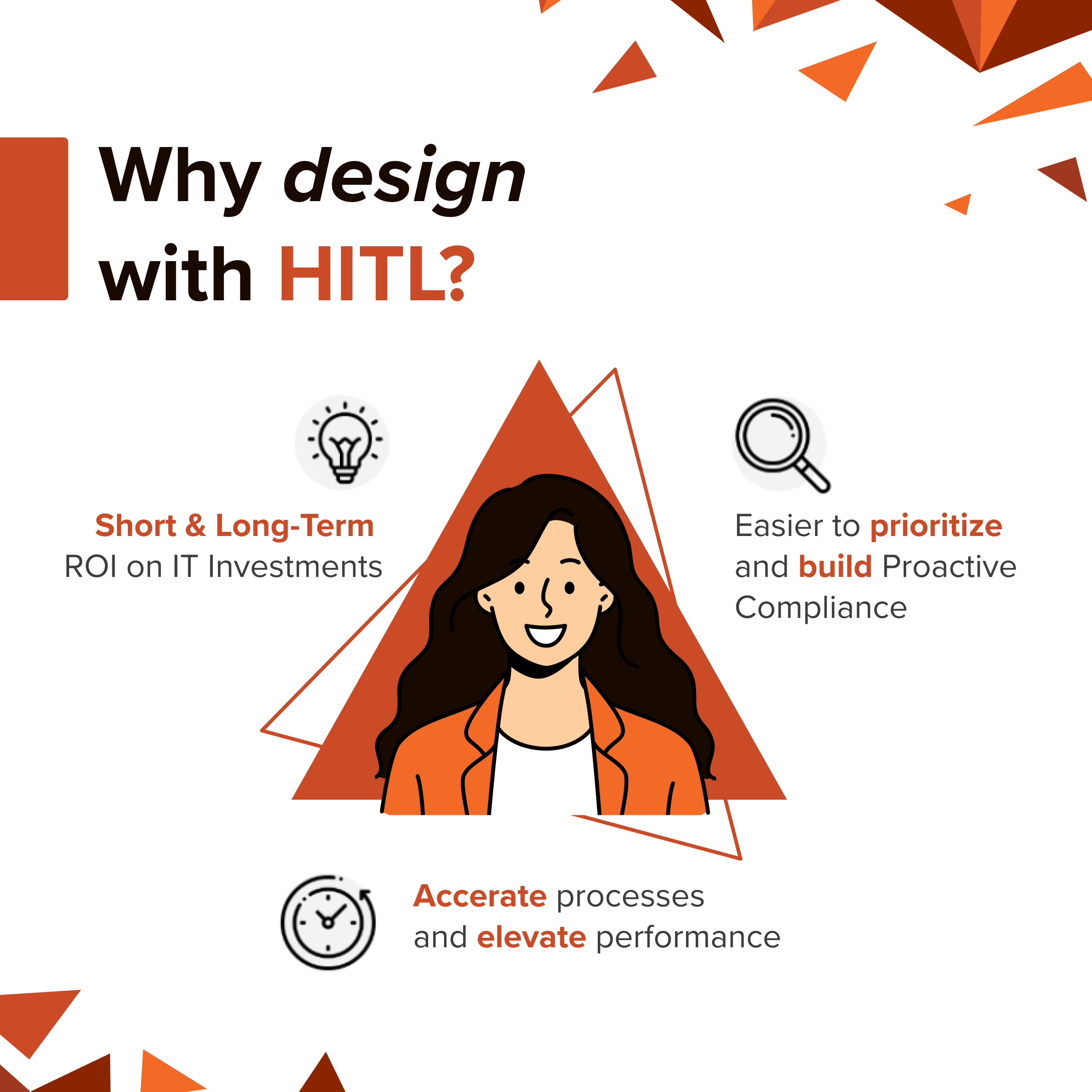
A: Maximizing ROI from AI in physical operations requires a strategic, human-centered approach that empowers operational problem solvers. Orchestrated AI, integrating OT and IT data with Human-in-the-Loop principles, ensures intuitive and trusted AI tools, leading to accelerated processes, elevated performance, easier prioritization, proactive compliance, and demonstrable short and long-term IT ROI.
A: Companies should focus on HITL for operational AI because applying AI in the physical world, particularly for frontline teams, unlocks significant business impact beyond theoretical gains. HITL ensures that complex AI systems translate into usable and impactful tools that truly elevate frontline team performance by integrating human expertise and oversight. This leads to tangible improvements in efficiency, cost reduction, and enhanced customer experience through the unification of OT and IT data and the delivery of actionable insights. Starting with operational improvements through HITL also provides a strategic pathway to expand into revenue-generating opportunities.
A: DFW Airport using predictive maintenance on jet bridges, higher education institutions optimizing energy consumption with occupancy data, pipeline workers using AI for improved diagnostics, and the early detection of water leaks in large campuses like DFW Airport by analyzing pressure data.
A: Higher education institutions achieving 7-9% energy consumption reductions through AI-driven optimization of physical building plans with IT data about key card scanning when people are in the building, and AI improving and streamlining how frontline workers diagnose and resolve equipment issues. The DFW Airport case study projects a 25% reduction in maintenance costs using predictive AI.
Companies are already reporting 75% AI projects delivered. Planned. Delivered. We've talked with companies still ironing out their first wave of AI?...
Why read this article? Discover what agentic process automation really means—and why it’s more than just another tech trend. Learn how CTOs and...
Harnessing AI offers a strategic opportunity to refresh operations by fundamentally redesigning systems around human capabilities, amplified by...