Transforming Sports: Advantages of AR and VR Innovation
Transforming Sports: Advantages of AR and VR Innovation What is AR/VR? Augmented Reality vs Virtual Reality: the two distinct but related...
Tonic3 develops and executes strategies that drive profit through Digital Transformation. Practically that means we are built to help clients hone the right strategy, implement the right technology, and build the right long-term capabilities to deliver lasting transformation.
Industries
We believe that effective technology helps people succeed in their daily lives. So we help our clients engineer useful technology for their clients, partners, and employees. That translates to every major industry, but over the years we’ve developed several core areas of expertise.
2 min read
Marion Decobert
:
Oct 16, 2023 2:15:30 PM
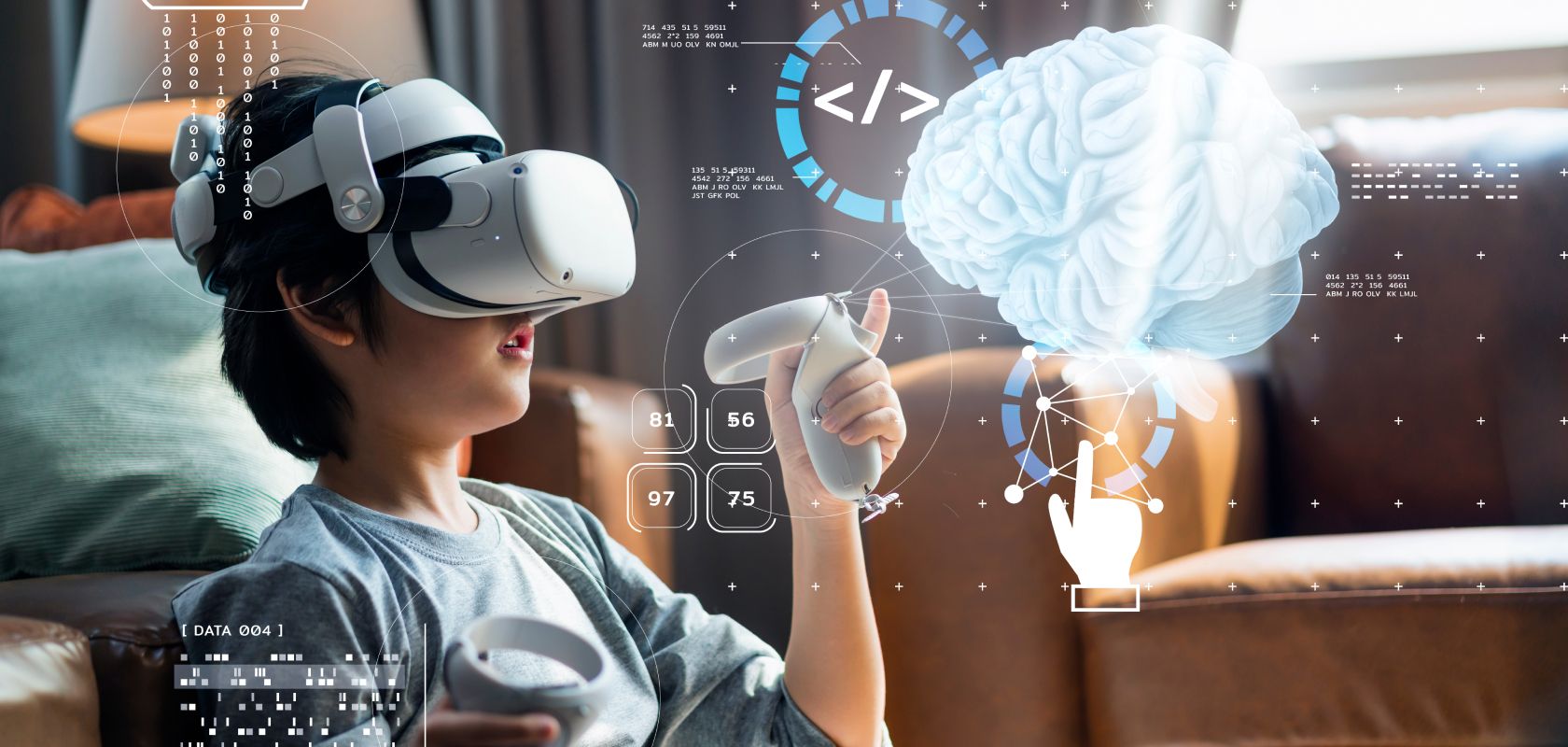
Education is continually evolving, and with the advent of technology, it's taking exciting new forms. One such innovation that's making waves in classrooms around the world is Extended Reality. XR is an umbrella term encompassing Virtual Reality, Augmented Reality, and Mixed Reality. These technologies have the power to transform the way we learn, making education more engaging and immersive. In this article, we'll explore how XR is reshaping education, making learning fun, interactive, and more effective.
Before diving into its application in education, let's understand what XR is. XR is all about extending our reality by blending the physical and digital worlds.
Virtual Reality (VR): It immerses you in a completely virtual environment. You put on a VR headset, and suddenly, you're in a whole new world.
Augmented Reality (AR): AR, on the other hand, overlays digital information onto the real world. Think of games like Pokémon GO, where you use your smartphone to see Pokémon creatures in your surroundings.
Mixed Reality (MR): MR combines elements of both VR and AR. It places virtual objects in your real-world environment, and these objects can interact with your surroundings.
Traditional textbooks and lectures can sometimes be boring. XR brings a new level of engagement to the classroom. Imagine learning about ancient Egypt by virtually walking through the pyramids, or studying biology by dissecting a virtual frog. Learning becomes exciting, interactive, and memorable.
Complex concepts are easier to understand when you can visualize them. XR allows students to explore intricate structures, such as the human body, in 3D. It helps learners grasp abstract ideas by making them tangible.
AR and VR enable students to create their worlds. With AR, they can design 3D models that interact with their surroundings. In VR, they can build virtual cities or other immersive experiences, encouraging creativity and problem-solving.
Field trips are an essential part of education, but they can be costly and challenging to organize. XR allows students to visit places they might not otherwise experience. They can "travel" to historical sites, natural wonders, and even outer space, all from the comfort of their classroom.
Not every student learns at the same pace or in the same way. XR can be tailored to individual learning needs. Students can progress through lessons at their own speed, and educators can adapt content to match students' skill levels and interests.
In a world where digital literacy is increasingly important, XR equips students with valuable tech skills. They learn to navigate virtual environments, interact with digital objects, and troubleshoot technical issues. These skills can be applied in a wide range of careers.
XR has the potential to make education more accessible. It can cater to various learning styles and accommodate students with disabilities. For example, AR can provide real-time translation of written text or spoken words, benefiting students who may struggle with language barriers.
XR transcends physical borders. Students can collaborate with peers from around the world on projects, allowing them to gain a broader perspective and develop global awareness.
While XR holds immense promise for education, there are challenges to overcome:
Extended Reality is transforming education by making learning interactive, engaging, and memorable. Through VR, AR, and MR, students can explore, experiment, and create, all while developing crucial tech skills. XR also has the potential to address various learning styles and promote inclusivity in education.
Although there are challenges, such as cost and the need for teacher training, the benefits of integrating XR into education are clear. As technology advances and becomes more accessible, the classroom of the future will be an exciting and immersive space where students can explore the world, unleash their creativity, and develop valuable skills. In the end, XR is not just a tool; it's a gateway to a brighter and more engaging future of learning.
Would you like to explore these solutions for your business? Request a demo!
Transforming Sports: Advantages of AR and VR Innovation What is AR/VR? Augmented Reality vs Virtual Reality: the two distinct but related...
Over the past year, we've seen some significant changes in how we enjoy sports, all thanks to augmented reality (AR), virtual reality (VR) and...
Have you ever wondered what virtual reality does? How can a helmet make you feel like you're flying through a city as you walk around the living room?